
Brazil’s and the People’s Agenda, Voiced by Lula, Sets the Tone for the Final Stretch
The decisive days of the first round require strong activism in the streets and on social media to secure Lula’s victory at the polls and defeat the grave threat hanging over the country
The presidential campaign enters the final stretch of the first round marked by a confrontation between clearly antagonistic poles. On one side stands Luiz Inácio Lula da Silva, with his record of defending democracy, national sovereignty, national development and the reindustrialization of the country, the appreciation of labor, income distribution and the reduction of inequalities, social and human rights, social inclusion, public security, education, science and technology, food security, and environmental protection.
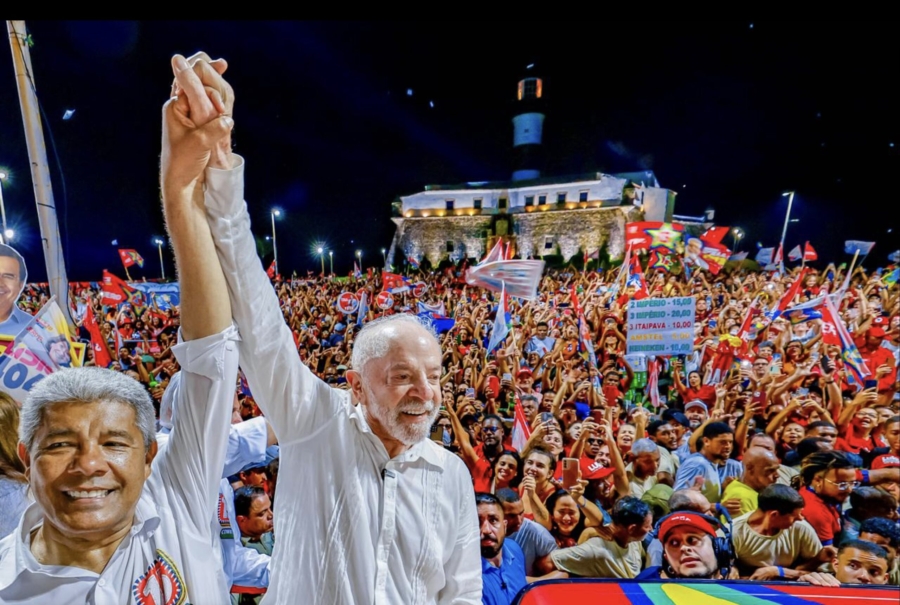
By putting an end to online betting, raising the Bolsa Família benefit, and embracing the people’s agenda, Lula has regained the initiative in the race and, at this decisive moment, his campaign is gaining energy and enthusiasm and drawing large crowds.
On the other side stands Flávio Bolsonaro, who, by coming out in favor of online betting after having sabotaged the approval of the end of the six-day-on, one-day-off work schedule, made it absolutely clear that he stands against the people. From beginning to end of this campaign, with reprehensible ostentation, Flávio has presented himself as a servant of Donald Trump’s government, pursuing an agenda of betrayal of the homeland: he conspired in favor of and backed the sweeping tariff hikes, and his program essentially consists of promoting the complete surrender of Brazil’s wealth to U.S. imperialism, beginning with rare earths and critical minerals.
The far-right candidate also has proven ties to the movement led by his father, Jair Bolsonaro, who was convicted and imprisoned for participation in an armed criminal organization and attempted violent abolition of the Democratic Rule of Law. If elected, Brazilian democracy would once again be mutilated. Evidence, facts, and several episodes demonstrate Flávio’s ties to criminal gangs and militias.
He is also the only presidential candidate formally under investigation by the Federal Police for corruption, money laundering, and illegal transfer of funds abroad in connection with the alleged financing of Dark Horse, a biographical film about his father. At the center of this case is his close relationship with convicted former banker and shareholder of Banco Master, Daniel Vorcaro. The candidate repeatedly lies: he has denied facts, changed his versions, and continues to make claims contradicted by evidence that is already widely known.
Flávio Bolsonaro, immersed in corruption, confines himself to this surrenderist agenda of national betrayal, while Lula demonstrates his stature as a leader with international prestige, as shown by his performance at the United Nations General Assembly on September 22, in a speech that connected democracy, sovereignty, multilateralism, the fight against hunger, development, climate change, artificial intelligence, and opposition to policies of war.
It is in this area, more directly connected to the population’s living conditions, that Lula’s campaign has concentrated its efforts in the final stretch of the first round. Among the most far-reaching measures is the restoration of Bolsa Família, with a 15.04% increase. Another move with major repercussions was the banning of online betting, aimed at confronting household indebtedness and protecting family income and public health. Polls show that Lula responded to a genuine popular outcry by putting an end to virtual casinos.
A Brazil free of online betting was a kind of earthquake in the dynamics of the race. Segments of the population that had until then remained disengaged from the electoral process woke up. President Lula then began to center his message on the country’s future, emphasizing a new generation of rights to be guaranteed to the people through the wealth generated by a robust cycle of development, should voters honor him with a fourth term.
Among his commitments are continuing the fight to end the six-day-on, one-day-off work schedule and reducing the workweek from 44 to 40 hours, without wage cuts; eliminating taxes on all basic food basket items, as well as adopting a system to refund part of the taxes paid by consumers; the government has also already established Desenrola Brasil 3.0, a new debt renegotiation program; the creation of the Brazil Against Cancer Network; the expansion of the Popular Pharmacy program to include free examinations and teleconsultations; and the expansion of the Now There Are Specialists program and the Smart Hospitals Network.
In education, the proposals include making the Pé-de-Meia program universal, introducing full-time education in all public schools, expanding training in artificial intelligence, robotics, and programming, and reviving the Science Without Borders program with a focus on technology and artificial intelligence. Other commitments include ensuring peace and security for the people, relentlessly combating criminal factions, and strengthening the Pact Against Femicide.
These are essential issues for the debate, in contrast to attempts to create turmoil in the campaign through diversions, such as Minister André Mendonça’s offensive against the Supreme Federal Court in an effort to undermine the country’s democratic legality, and the recent episode involving a post by comedian Antonio Tabet about Our Lady of Aparecida, which touched on constitutional principles such as freedom of expression, religious freedom, and the right to profess a faith or to not adhere to any religion.
By placing himself at the center of this episode, Flávio shot himself in the foot, attacked the Catholic Church, and caused serious damage to his campaign in the final days before the vote, bringing back to the surface the politics of hatred, the manipulation of faith, and the religious intolerance associated with Bolsonarismo.
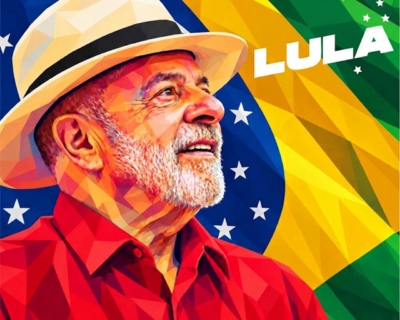
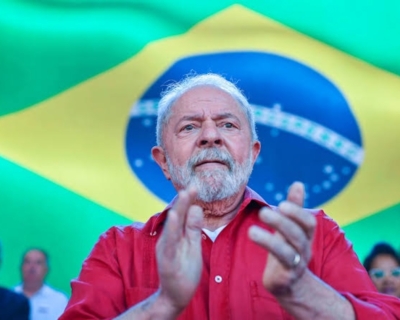
The agenda of the people’s rights, democracy, and Brazil’s sovereignty, voiced by Lula, is bringing strong and favorable winds, awakening confidence and hope among voters and raising the level of mobilization among democratic, popular, and patriotic activists.
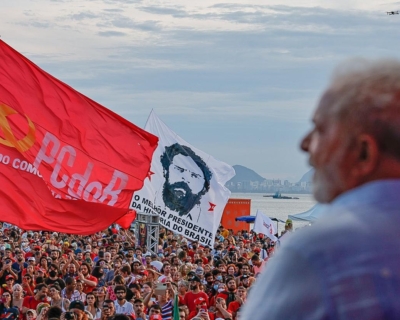
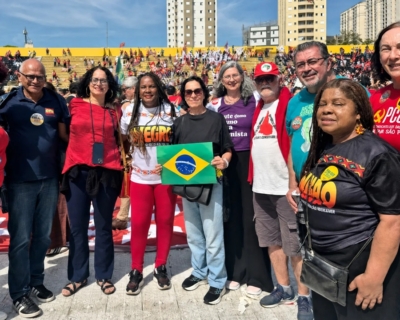
In this final stretch of an extremely close contest, a stronger presence in the streets and on social media is essential in every corner of the country: changing minds and winning votes, raising flags, giving life to the expectation of victory, calling voters to the polls, reducing abstention to a minimum, with special emphasis on strengthening mobilization around Lula’s campaign schedule, which includes rallies and marches in Belém, Fortaleza, Salvador, Juiz de Fora, Rio de Janeiro, Belo Horizonte, and São Paulo.
If Lula’s election is confirmed, it will require a solid parliamentary, political, and social base. That is why a strong left-wing bloc in the National Congress is essential, in which the Communist Party of Brazil (PCdoB) plays a fundamental role and needs to expand its representation, alongside the election of deputies, senators, governors, and representatives in state legislative assemblies committed to the country’s interests and the rights of the people.